8 Reasons Every Nature Lover Should Travel to Japan and Visit Mt. Fuji
Gardeners understand nature on a different level than most travelers. You notice the soil. You clock the season. You stop at a roadside wildflower that everyone else walks past. That sensitivity, that habit of paying close attention to growing things, makes certain travel destinations hit differently.
Japan is one of them. And Mt. Fuji sits at the heart of it.
The mountain is iconic enough that you’ve certainly seen it in photos. But photos don’t prepare you for the surrounding landscape: the volcanic terrain, the ancient cedar forests, the crater lakes, the wildflowers pushing through the ash fields in early summer. Japan has built centuries of garden culture around an intimate relationship with the natural world, and nowhere is that relationship more visible than around the base and slopes of Fuji-san. Here are eight reasons it belongs on your travel list.
1. Japan’s Seasonal Rhythms Mirror a Gardener’s Own Calendar
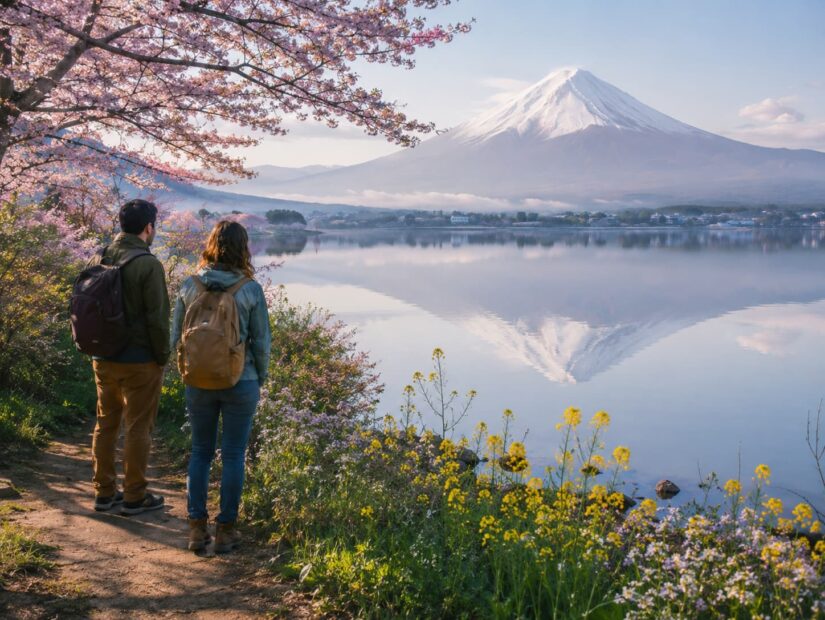
No culture on earth marks the seasons as consciously as Japan does. The arrival of cherry blossoms in spring is a national event. Summer brings fireworks and hydrangea. Autumn is defined by momiji, the turning of the maple leaves, which gardeners will recognize as a spectacle that rivals anything in North America or Europe. Winter strips everything back to clean lines and bare branches.
For anyone who gardens, this feels less like foreign culture and more like home, just turned up several notches. The Japanese concept of mono no aware, the bittersweet awareness of impermanence, is something every gardener already lives intuitively. You plant knowing the frost will come. You deadhead knowing next year’s seeds are already forming. Japan puts language and ceremony around feelings that gardeners already carry.
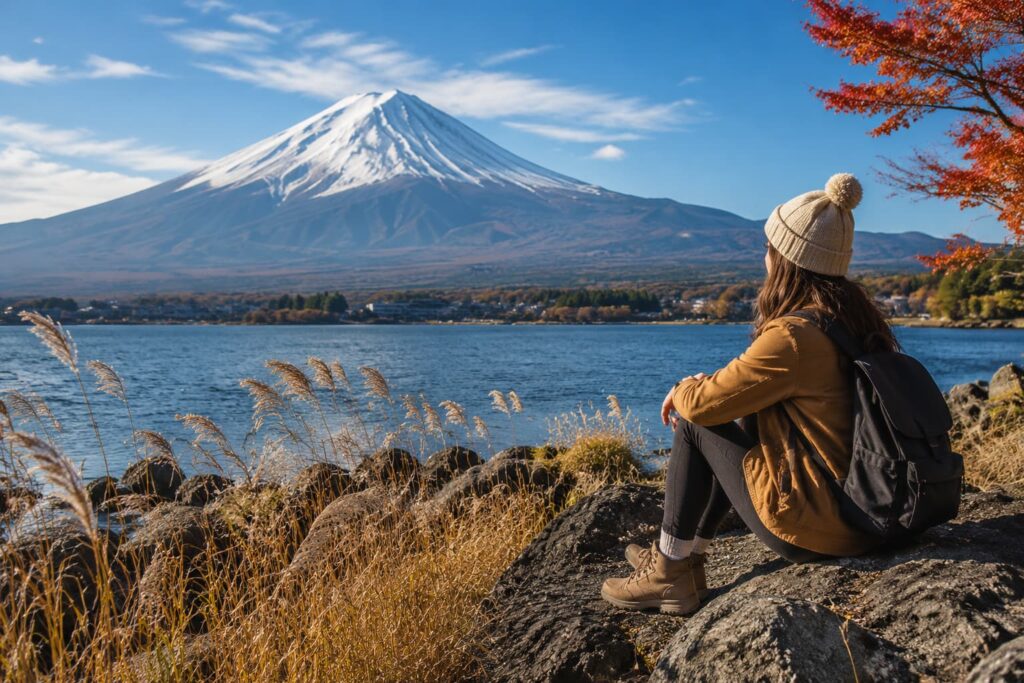
Visiting Mt. Fuji across different seasons produces completely different experiences. The mountain wears snow until well into spring, frames itself in autumn foliage around October, and becomes surrounded by brilliant wildflowers by July. Each visit is its own thing.
2. The Volcanic Soil Around Fuji Is Unlike Anything You’ve Seen
Mt. Fuji is a stratovolcano, and its soil shows it. The ground around the base is dark, porous, and mineral-rich, a product of repeated lava flows over centuries. Hiking through the lower forested zones, you’ll notice how plants adapt to this unusual substrate. Moss colonizes bare rock faces. Tree roots spread wide and shallow across hardened lava. Pioneer species cling to terrain that looks like it shouldn’t support anything at all.
For gardeners who care about soil, this is genuinely fascinating. It’s a living lesson in how plants find a way. Japan’s forests at the base of Fuji, particularly in the Aokigahara region, grow directly from a lava flow that dates to the 9th century. The trees have been at it for over a thousand years, and the forest floor reflects that slow, patient accumulation of organic matter. Walking through it feels like watching composting on a geological scale.
3. The Five Lakes Region Is a Master Class in Landscape Design
The Fuji Five Lakes, spread across the northern base of the mountain, are some of the most composed natural landscapes you’ll find anywhere. Kawaguchiko, the most accessible of the five, has been framing Mt. Fuji in its reflections for centuries. Photographers line the shores at dawn. But what strikes a gardener is how the surrounding landscape has been cultivated and left wild in careful proportion.
The lakeside parks here use native plantings, seasonal color, and natural water features in ways that feel effortless. Water features in landscape design are something gardeners often struggle to execute well at home, but Japan manages them instinctively. If you’ve ever wrestled with how to integrate a pond or stream into a garden, spending a few hours around these lakes offers more practical inspiration than any seminar could. Our piece on water features in landscape design covers some of the principles involved, and you’ll see them applied beautifully here at full scale.
4. Mt. Fuji’s Wildflowers Are a Revelation in Every Sense
The climbing season for Mt. Fuji runs roughly from July through early September, which coincides with the wildflower bloom across the alpine meadows. Fujizakura, the small five-petaled cherry that grows only in the Fuji region, flowers in spring at lower elevations and has become a symbol of Yamanashi Prefecture. At higher altitudes in summer, you’ll find clusters of Japanese mountain flowers that grow nowhere else, species adapted to thin volcanic soil, high UV exposure, and rapid temperature swings.
For anyone who grows alpine or rock garden plants, this is the origin story. The conditions that produce some of our most treasured ornamental plants, the primulas, the gentians, the saxifrages, play out visibly here. You can watch these plants doing exactly what they evolved to do, in exactly the terrain they evolved for. It changes how you look at them when you grow them at home.
5. Japan’s Ancient Forest Culture Has No Equivalent Elsewhere
Japan has been managing and revering its forests for over a thousand years. The concept of satoyama, traditional village landscapes where managed forests, farmland, and settlements coexist in balance, produced a kind of landscape stewardship that modern permaculture designers study closely. Around Mt. Fuji, you can walk through forests that have been tended across generations, where every tree, path, and clearing reflects accumulated human knowledge about how to live alongside natural systems rather than against them.
The Japan Forest Therapy Society has designated walking trails in this region specifically for health and wellbeing, drawing on the same shinrin-yoku research that has influenced nature-based wellness programs globally. For gardeners who already know that time among plants is good for the body and mind, Japan simply formalizes what you’ve always suspected.
6. Guided Tours Open Up Access Most Independent Travelers Miss
Mt. Fuji is a crowded destination, and navigating it independently takes more planning than most travelers expect. Transport from Tokyo to the mountain is straightforward, but reaching the best viewpoints, timing hikes around cloud cover, and knowing which routes to take in different seasons is where many visitors go wrong. A good guide makes the difference between a scenic day trip and a genuinely memorable experience.
Operators like Mt. Fuji Tours offer guided experiences that go well beyond the standard tourist route: sunrise climbs, tea ceremony pairings, lake district walks, and trips timed to specific seasonal highlights like the cherry blossom or autumn foliage periods. For nature lovers who want to actually absorb the landscape rather than photograph it from a car window, having an experienced guide who knows the terrain is worth it.
7. Japanese Garden Culture Will Permanently Change How You Design at Home
The gardens near Mt. Fuji, and across Japan generally, operate on principles that Western garden design is still catching up to. Negative space is as important as planting. Borrowed scenery, using distant views like Fuji itself as a backdrop for a garden, is a core design technique. Asymmetry is preferred over formal symmetry. Seasonality is built in from the start rather than treated as an afterthought.
Spending even a few days among Japanese gardens recalibrates your eye. You come home and look at your own space differently: where the sight lines are, what you’re framing, what you could remove to let existing plants breathe. This applies whether you’re working with a large backyard or a balcony setup. Our post on organic container gardening touches on some of this philosophy of editing and restraint, and Japan applies it at every scale.
8. The Experience of Climbing Fuji Itself Is One Worth Having
Not everyone who visits Mt. Fuji climbs it, and that’s fine. The mountain is genuinely demanding, and plenty of the best experiences happen at the base. But for those who do make the ascent, the climb is something else.
The standard Yoshida Trail starts at the 5th Station and takes most people between five and eight hours to reach the summit. There’s nothing technical about it, but altitude sickness, cold temperatures, and rapidly changing weather make preparation essential. The reward at the top is a crater that looks like it belongs on another planet: a perfect volcanic caldera, roughly 780 meters across, surrounded by jagged dark rock and, on clear mornings, a view across the entire Kanto plain to Tokyo.
The Japanese say “Everyone should climb Mt. Fuji once, but only a fool climbs it twice.” That’s underselling it a bit, but the sentiment is right. It’s a singular experience. The kind that sits in your memory for a long time and changes, in some small but real way, how you think about effort, scale, and what the natural world is actually capable of.
A Final Thought
Travel and gardening share the same basic impulse: paying attention to the living world around you. Japan rewards that attention as well as anywhere on earth. The landscape around Mt. Fuji, the volcanic soils, the alpine meadows, the ancient forests, the lakeside gardens, gives you things to look at, think about, and bring home in the way you see your own garden.
You don’t need to climb to the summit to get something real from the trip. A few days at the base, walking the lake shores in the right season, watching the mountain reveal itself through morning cloud, is enough to understand why Japanese gardeners, poets, and painters have been obsessed with this place for centuries.
If you’re thinking about making the journey, the best advice is to go with the seasons in mind and plan further ahead than you think you need to. The mountain is patient. It’ll be there. But the cherry blossoms won’t.